
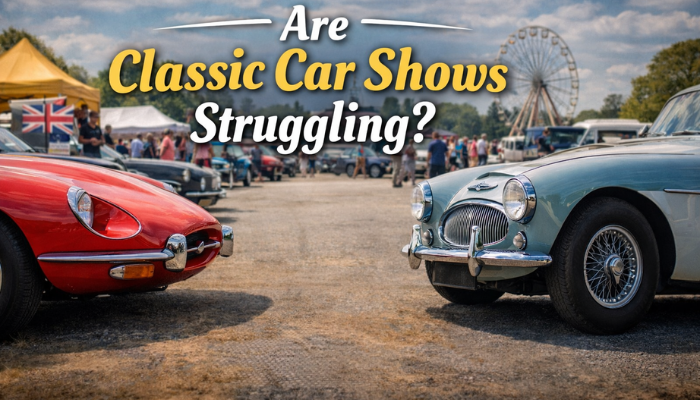
There was a time when the summer calendar revolved around classic car shows. From small village greens to sprawling showgrounds packed with everything from Austin Sevens to American muscle, these events have long been the heartbeat of the classic car community. For many enthusiasts, it isn’t just about the cars, it’s about the people, the stories, and the shared passion that bring everyone together.
But recently, there’s been a bit of chatter within the community. Are classic car shows starting to lose their shine? Or are they simply changing with the times?
If you’ve been to a few events over the past couple of years, you may have noticed things feel slightly different. Some shows are bigger than ever, while others seem quieter. At the same time, smaller, more informal meets are popping up everywhere, often organised through social media rather than clubs or committees.
So, are classic car shows really struggling… or is the hobby simply evolving?
Why Classic Car Shows Have Always Been at the Heart of the Hobby
Classic car shows have always been about more than just rows of automobiles. They’re where enthusiasts come together, where stories are shared, and where cars that usually live tucked away in garages get their moment in the spotlight. Whether it’s a local meet with a handful of cars or a major event drawing thousands, classic car shows have played a huge role in keeping the hobby alive.
For decades, these events have been the highlight of the year for many owners. You’d spend weeks getting the car ready, polishing every inch, making sure it was just right before setting off early in the morning for a day surrounded by like-minded people. There’s a real sense of occasion to it.
They also offer something you can’t get online. You can see the cars up close, hear them running, speak to owners, and get a real feel for the history behind them. That human connection is what makes classic car shows so special.
And let’s be honest, there’s nothing quite like walking through rows of classics on a sunny day, spotting something you haven’t seen in years; or maybe ever.
Are Classic Car Shows Changing Rather Than Struggling?
It’s easy to assume that if something feels different, it must be in decline. But when it comes to classic car shows, that might not be the case at all. What we’re seeing could simply be a shift in how people choose to engage with the hobby.
Today’s enthusiasts have more choice than ever. Social media has made it incredibly easy to find events, connect with other owners, and discover new gatherings. As a result, people aren’t relying solely on traditional club-organised classic car shows anymore.
Instead, they’re becoming more selective. Rather than attending every event in the calendar, many owners are choosing a handful of shows they really enjoy and skipping the rest. This doesn’t mean interest is dropping, it just means people are being more intentional with their time.
There’s also a generational shift happening. Newer enthusiasts often come into the hobby through different routes, social media content, YouTube, or blogs, and that influences the types of events they gravitate towards.
So rather than struggling, classic car shows may simply be adapting to a new kind of audience.
What’s Influencing the Way Classic Car Shows Are Attended Today
There are several factors shaping how people attend classic car shows today, and most of them come down to lifestyle and practicality rather than a lack of interest.
For one, time is more limited than it used to be. Weekends are busy, and committing an entire day, or sometimes a full weekend, to a show isn’t always as easy as it once was. That means enthusiasts are becoming more selective about which classic car shows they attend.
Then there’s the cost of getting there. Fuel prices, entry fees, and food on the day all add up. If you’ve got a classic that isn’t exactly known for its fuel economy, a long trip to a show becomes more of a consideration.
Weather also plays a part. Let’s face it, British summers are unpredictable at best. A washed-out show can be enough to put people off committing to multiple events throughout the season.
None of this suggests that classic car shows are losing relevance. If anything, it highlights that enthusiasts still care deeply about attending, they’re just choosing carefully where and when they go.
How Cars & Coffee Events Are Complementing Classic Car Shows
Alongside traditional classic car shows, a different kind of event has been quietly growing in popularity, Cars & Coffee meets. These gatherings are typically more relaxed, often held in the morning, and usually require very little planning or commitment.
You simply turn up, grab a coffee, have a chat, admire the cars, and head off. There’s no judging, no pressure, and no expectation to stay all day. That simplicity is exactly what makes them appealing.
Rather than replacing classic car shows, these events are complementing them. Many enthusiasts enjoy both. They might attend a few larger shows throughout the year, while also dropping into more informal meets on a regular basis.
These gatherings are also attracting a slightly different crowd. They tend to be more accessible, particularly for younger enthusiasts or those new to the hobby. There’s no barrier to entry, and the atmosphere is generally very welcoming.
It’s not a case of one format taking over from the other. Instead, the classic car scene is expanding to include a wider variety of ways to enjoy the cars.
Three Fantastic Cars & Coffee Events Worth Visiting
If you haven’t experienced a Cars & Coffee event yet, it’s well worth adding one to your calendar. Hagerty has put together a great list of some of the best in the UK, and a few stand out as must-visits.
First up, The Motorist is a regular meetup Leeds, it’s one of, if not THE biggest and busiest car hangouts in the UK. With parking for 800 cars there are 150 events every year. There’s also a kitchen, a members’ club, shop, and garage so it can cater for all your automotive needs.
Then there’s Caffeine & Machine, which has become something of a hub for car culture. You’ll find everything from classics to modern performance cars, all in a laid-back, social environment.
Finally, Goodwood’s Breakfast Club offers a slightly more curated experience, with themed events that bring together some fantastic cars in an iconic location.
These events highlight how the hobby is evolving. They don’t replace classic car shows, but they offer something different, something that fits more easily into modern life.
Three Classic Car Shows You Should Visit This Year
While new formats are growing, traditional classic car shows are still very much alive and well, and some remain absolute must-visits.
Haggerty’s Festival of the Unexceptional on 25th of July. This one’s for the people that like to see the everyday cars of years gone by. The one’s your dad might have owned, the one’s people didn’t tend to save making them rare and quirky. “FOTU puts the spotlight on automotive history’s most marvellously mundane machines.”
Goodwood’s Revival is on between 18-20 September. This one’s for those that enjoy a full experience, billed as an immersive celebration of vintage cars and fashion. There’s motor racing, theatrical experiences, workshops and gorgeous cars. What more could you want?
The NEC Classic Car Show is on from 13-19 of November. This is a huge annual event with over 3000 cars on show, 600 cars and bikes for sale by auction, specialist traders, competitions and a restoration workshop. It’s advertised as the ultimate day out for anyone who loves life on four (or two!) wheels.
These classic car shows continue to draw crowds year after year, proving that there’s still a huge appetite for these events.
The Future of Classic Car Shows
So, are classic car shows struggling? Not necessarily. What we’re really seeing is a shift, a broadening of the hobby rather than a decline.
Traditional shows still have a vital role to play. They bring scale, history, and a sense of occasion that smaller events simply can’t replicate. At the same time, newer formats like Cars & Coffee meets are making the hobby more accessible and more flexible.
The future likely isn’t one or the other. It’s both. A mix of large, established classic car shows and smaller, informal gatherings that together keep the community alive and thriving.
And that’s probably a good thing. Because as long as people are still getting out, driving their cars, and sharing that passion with others, the spirit of the classic car world isn’t going anywhere.
The only real question is… which do you prefer?


Leave A Comment