
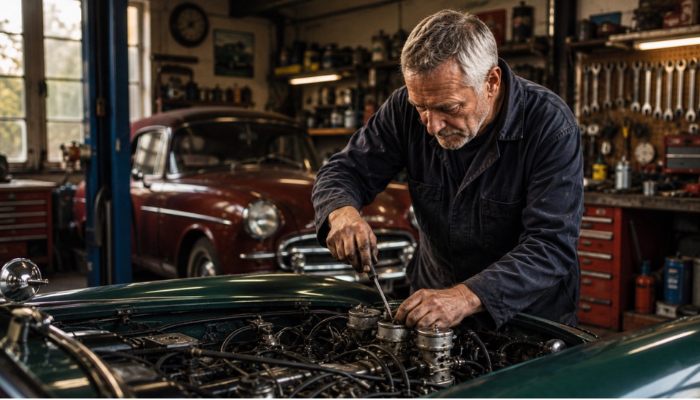
Classic cars have survived fuel crises, scrappage schemes, emissions regulations and decades of changing motoring trends. Yet one of the biggest threats facing the hobby in 2026 might not be legislation or rising costs at all. It could simply be a lack of people who know how to fix them.
Spend enough time around the classic car world and you’ll hear the same concern coming up repeatedly. Older mechanics are retiring, fewer young people are entering the trade, and many modern technicians are trained almost entirely around diagnostics and software rather than carburettors, points ignition or analogue engineering.
At the same time, interest in classic cars and restoration work continues to grow. Restoration businesses are busy, usable classics remain popular, and more enthusiasts are trying to preserve older vehicles than ever before. That creates an interesting situation: demand for skilled mechanics is rising just as the number of experienced specialists appears to be shrinking.
So, what does that mean for the future of classic cars? And could a shortage of specialist mechanics eventually change the way enthusiasts buy, restore and maintain their vehicles?
Why Classic Cars and Mechanics Depend on Each Other More Than Ever
Classic cars have always relied on skilled hands to keep them alive. Unlike modern vehicles, they often require mechanical understanding rather than simply plugging into a laptop. Tuning carburettors, adjusting timing, rebuilding SU fuel pumps or diagnosing a misfire by ear are all skills built through experience.
That’s why the relationship between classic cars and mechanics has always been so important. Owners may love driving their vehicles, but many still depend on specialists to keep them reliable and roadworthy.
The challenge is that the industry is changing rapidly. Modern garages increasingly focus on software diagnostics, hybrid systems and EV training. Younger technicians entering the trade are learning how to service complex modern vehicles, but fewer are being exposed to older technology.
This isn’t because younger mechanics lack interest. It’s simply that classic vehicles now sit outside mainstream automotive training. As a result, much of the knowledge surrounding classic cars and mechanics still sits with an ageing generation of specialists.
That creates a worrying question for enthusiasts. What happens when those specialists eventually retire?
The Growing Skills Shortage Facing the Automotive Industry
The mechanic shortage isn’t just affecting classic cars. The wider automotive industry is already struggling to recruit and retain skilled technicians.
Recent reports from the Institute of the Motor Industry suggest around 16,000 automotive roles remain unfilled in the UK because not enough people are entering the trade.
At the same time, many experienced technicians are approaching retirement age. Industry reporting from the Financial Times highlighted concerns that a significant proportion of skilled classic car specialists could retire over the next decade without enough younger people replacing them.
For modern garages, this creates staffing pressure. For the classic car world, it creates something more serious. Classic vehicles require specialist knowledge that often isn’t written down in manuals or diagnostic software. Much of it is practical experience passed from one generation to the next.
The danger isn’t that classic cars suddenly become impossible to repair overnight. It’s that waiting lists get longer, labour costs rise, and certain skills slowly become harder to find.
Many enthusiasts are already noticing this. Some restoration shops are booked months or even years in advance, particularly for bodywork, paint and specialist engine rebuilding.
Why Restoration Costs for Classic Cars Keep Rising
One of the clearest signs of this growing pressure is the rising cost of restoration work.
Restoring classic cars has never been cheap, but costs in 2026 are climbing sharply. Depending on the condition of the vehicle and the level of finish required, full restorations can now easily exceed £20,000–£60,000 in the UK, with concours-level projects reaching far beyond that.
A large part of this comes down to labour. Restoration is time-intensive, skilled work. Rust repair, fabrication, paint preparation and engine rebuilding all require specialist mechanics and craftsmen with years of experience.
At the same time, restoration demand remains strong. Industry forecasts suggest the classic restoration and restomod sector will continue growing throughout the next decade.
That creates a simple supply-and-demand issue. More people want work done, but there are fewer highly skilled mechanics available to do it.
For owners of classic cars, this means projects that may once have been affordable are becoming harder to justify financially. It also explains why “usable classics” are growing in popularity. Many enthusiasts now prefer well-maintained, driveable cars over full restoration projects that could spiral in cost.
Are Younger Mechanics Interested in Classic Cars?
This is where things become more optimistic.
Despite concerns about ageing specialists, there are signs that younger enthusiasts are beginning to take an interest in older vehicles and traditional engineering skills. Organisations like StarterMotor are actively working to encourage younger people into the classic vehicle industry by connecting them with restoration businesses and hands-on experience.
Social media has also played a surprisingly important role. YouTube channels focused on restorations, barn finds and workshop projects have helped make classic mechanics feel more accessible and interesting to younger audiences.
There’s also growing appreciation for analogue engineering. In a world increasingly dominated by screens and software, many younger enthusiasts are drawn to the mechanical simplicity of older cars. They like the fact you can physically see how things work.
That doesn’t mean the skills shortage disappears overnight. It takes years to become truly experienced with classic cars and mechanics. But the interest is there, and that matters.
The challenge now is ensuring those skills are passed on before too much knowledge disappears.
How Modern Technology Is Helping Classic Cars and Mechanics
Interestingly, modern technology might actually help preserve classic cars rather than replace them.
While many enthusiasts prefer originality, technology such as 3D scanning, CNC machining and improved reproduction parts manufacturing is making restorations easier in some areas. Rare components that were once almost impossible to source can now be recreated more accurately than ever before.
Online communities are also transforming the hobby. Owners can now access technical information, forums, workshop manuals and specialist advice instantly. That makes maintaining older cars less intimidating than it once was.
Even social media has helped smaller restoration businesses gain visibility. Skilled mechanics who may once have relied purely on word-of-mouth recommendations can now showcase their work online to a global audience.
Of course, none of this replaces experience. Watching a video on SU carb tuning is very different from spending thirty years rebuilding them. But technology can help bridge the gap and keep more classic cars on the road.
Why the Future of Classic Cars and Mechanics Still Looks Positive
Despite the concerns, it’s important not to become overly pessimistic about the future.
Classic cars have survived enormous changes before. Every decade seems to bring predictions that the hobby is dying, yet enthusiasts continue finding new ways to keep these vehicles alive.
In fact, the classic car market itself remains strong. Recent market reports suggest demand for certain usable classics and well-restored cars is still healthy, particularly among younger buyers entering the hobby through 1980s and 1990s vehicles.
That continued interest is important because enthusiasm drives everything else. As long as people still care about these cars, there will always be demand for mechanics who can maintain them.
What may change is the structure of the hobby. Specialist garages could become even more valuable. Apprenticeships focused specifically on heritage vehicles may grow. Smaller independent workshops may become increasingly important as larger garages focus more heavily on modern vehicles and EV servicing.
Rather than disappearing, the classic car world may simply become more specialist and community-driven.
Conclusion
The relationship between classic cars and mechanics has never been more important than it is today.
As older specialists retire and modern vehicles dominate automotive training, there’s genuine concern about who will maintain and restore classic vehicles in the future. Rising restoration costs, longer waiting lists and industry-wide skills shortages all suggest the pressure is real.
But this isn’t a story about the death of the hobby. It’s a story about transition.
Interest in classic cars remains strong. Younger enthusiasts are still discovering older vehicles, restoration businesses continue to grow, and organisations are actively trying to preserve specialist skills for the next generation.
The future may look slightly different. Owners may need to plan restorations more carefully, wait longer for specialist work, or become more hands-on themselves. But the passion behind classic cars isn’t disappearing anytime soon.
And as long as there are people willing to learn, restore and preserve these vehicles, there will always be mechanics keeping them alive.



Leave A Comment