
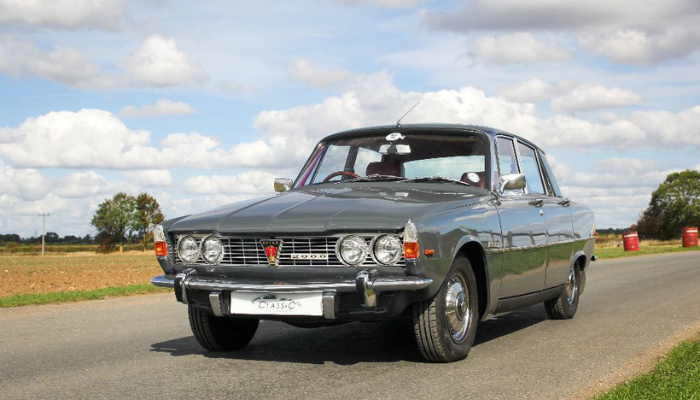
Rover was once one of Britain’s most respected car manufacturers. The badge carried weight. It meant quiet engineering confidence, understated luxury, and cars built for people who valued refinement over flashiness. From the dignified P4 to the advanced P6 and the bold SD1, Rover had moments of genuine brilliance. So how did it all unravel?
When people talk about the demise of Rover, one issue always surfaces first: the infamous K-Series head gasket failures. But reducing Rover’s collapse to a gasket problem is far too simplistic. The truth is deeper, more complicated, and stretches back decades before the final administration in 2005.
Rover did not fall because of one faulty component. It fell because of long-term brand confusion, chronic underinvestment, political interference, management missteps, fierce global competition, and yes, damaging reliability headlines at the worst possible time. The K-Series engine became symbolic of Rover’s struggles, but it was only one part of a much larger story.
To understand why Rover collapsed, we need to step back and look at the full picture.
Rover Before the Collapse: A Brand Built on Engineering Integrity
Before the chaos, Rover had credibility. The post-war P4 and P5 models established Rover as a maker of refined, conservative executive cars. These were solid, dependable machines with a reputation for durability and class. The Rover P6, launched in 1963, was particularly forward-thinking, with advanced suspension and safety engineering that was ahead of its time.
Rover was not chasing volume. It was chasing respectability. It sat comfortably in a niche between mainstream brands and true luxury marques.
That identity began to blur in the 1970s.
British Leyland and the Beginning of Instability
Rover became part of British Leyland in 1967, and this is where many of the long-term structural problems began. British Leyland was a sprawling conglomerate that included Austin, Morris, Triumph, Jaguar, and Land Rover, among others. It suffered from overlapping products, internal competition, frequent strikes, poor quality control, and political interference.
The Rover SD1, launched in 1976, should have been a triumph. Its fastback design was modern and bold, and it even won European Car of the Year. But build quality issues plagued it from the start. Customers encountered poor panel fit, unreliable electrics, and inconsistent assembly standards.
The SD1 damaged Rover’s reputation for quality, and while later production improved, first impressions are hard to undo. British Leyland’s instability meant Rover was no longer fully in control of its destiny.
The Identity Crisis of the 1980s and 1990s
By the 1980s, Rover was struggling to define what it stood for. Was it a premium British alternative to BMW? Was it a comfortable executive brand? Was it a mainstream family car manufacturer?
The Honda partnership, which began in the 1980s, brought temporary stability. Cars like the Rover 200, 400 and 600 were essentially Honda-based models with Rover styling and interiors. They were well-built and reliable, and the partnership gave Rover access to modern engineering without enormous development costs.
However, this came at a price. Rover became dependent on Honda platforms and technology. While the cars were competent, Rover lost some of its engineering independence. It was surviving rather than leading.
The brand identity continued to blur. Customers struggled to understand what Rover represented. Was it competing with Ford, or with BMW? Without a clear answer, Rover’s position in the market weakened.
BMW Takes Over: Opportunity and Cultural Clash
In 1994, BMW acquired the Rover Group. On paper, this looked like a lifeline. BMW had money, engineering expertise, and a clear brand strategy. Rover could benefit from that strength.
BMW invested heavily, particularly in the development of the Rover 75. The 75, launched in 1999, was a genuinely good car. It was comfortable, well-appointed, and stylish in a traditional British way. It felt like a return to Rover’s roots.
However, tensions developed between German management and the British workforce. Losses mounted. BMW reportedly underestimated the scale of the challenges within Rover, particularly around ageing product lines and production inefficiencies.
By 2000, BMW decided to break up the Rover Group. Land Rover was sold to Ford. Mini was retained and successfully reinvented. Rover itself was sold to the Phoenix Consortium for a nominal £10.
That moment effectively left Rover isolated and vulnerable.
Underinvestment and an Ageing Model Line-Up
After BMW’s departure, Rover faced a harsh reality. It needed new models, new platforms, and fresh investment to survive. Instead, it was left with an ageing range.
The Rover 25 was based on the 1995 Rover 200.
The Rover 45 was based on the 1995 Rover 400.
The Rover 75 was strong but ageing rapidly in a competitive segment.
Facelifts can only go so far. Without significant new platform investment, Rover’s line-up became increasingly outdated. Meanwhile, competitors were launching entirely new models every few years with better safety, improved efficiency, and stronger brand backing.
In a global car market that demands constant renewal, standing still is fatal.
The K-Series Engine: Innovation Turned Liability
Now we arrive at the most infamous part of Rover’s story: the K-Series engine and its head gasket failures.
The K-Series was not a bad engine by design. In fact, it was innovative. It featured all-aluminium construction, a lightweight design, and a modular architecture. It used long through-bolts to clamp the block and head together and was originally developed for small-capacity applications.
The problems emerged as the engine was enlarged to 1.6 and 1.8 litres. Increased bore size and higher combustion temperatures placed greater stress on the engine. The cooling system layout, with limited coolant capacity and thermostat positioning that was less than ideal, made the engine vulnerable to overheating if coolant levels dropped.
Early versions used plastic locating dowels and a single-layer elastomer head gasket. Under repeated thermal cycling, slight movement between the head and block could occur, compromising the seal.
In mid-engined applications like the MGF, longer coolant pipe runs and more complex bleeding procedures increased the likelihood of overheating. Once a head gasket failed, the narrative spread quickly.
Even though Rover eventually introduced improved multi-layer steel gaskets and steel dowels, the damage was done. The phrase “Rover head gasket failure” became embedded in public consciousness.
The K-Series did not kill Rover on its own, but it severely damaged consumer confidence at a time when the company desperately needed trust.
Reputation Collapse and Loss of Confidence
Car buyers are sensitive to reputation. Reliability headlines can undo years of engineering effort. As stories of head gasket failures circulated, fleet buyers and private customers began to hesitate.
Residual values dropped. Dealers struggled to convince customers. The media amplified the issue. Even cars that were not directly affected suffered from the stigma.
When a brand loses trust, it is incredibly difficult to recover without a fresh start and significant investment. Rover had neither.
Fierce Competition and Changing Market Dynamics
While Rover struggled, competitors were improving rapidly. German brands refined their premium positioning. Japanese manufacturers strengthened their reputation for reliability. Even mainstream brands were investing heavily in design, safety, and technology.
Rover, by contrast, lacked the capital to keep pace. It could not fund entirely new platforms or cutting-edge powertrains. Without competitive diesel options in key segments, it fell further behind in European markets.
The automotive world was becoming more global and more demanding. Rover simply did not have the financial backing to compete on equal terms.
The Final Years and Administration
Under the Phoenix Consortium, Rover attempted to secure partnerships, including discussions with Chinese manufacturers. But time and money were running out.
In April 2005, MG Rover entered administration. Over 6,000 jobs were lost, and the Longbridge plant fell silent.
It was the end of Rover as a volume car manufacturer.
What Really Caused the Demise of Rover?
The demise of Rover was not caused by a single catastrophic mistake. It was the result of cumulative pressures that built up over decades.
British Leyland’s instability weakened the brand. Identity confusion blurred its market position. Dependence on partners limited independence. Underinvestment left an ageing model range. The K-Series head gasket failures damaged trust. Competition intensified. Public confidence collapsed.
The head gasket became symbolic, but it was not the sole cause. It was one visible symptom of deeper structural problems.
Rover’s story is a cautionary tale. It shows how fragile even established automotive brands can be without consistent strategy, investment, and clear identity. Yet it also reminds us that Rover produced some genuinely excellent cars. The Rover 75, in particular, remains a testament to what the brand could achieve under the right circumstances.
Today, Rover lives on only in enthusiast circles and cherished classics. And perhaps that is fitting. While the company may have fallen, the cars and the passion behind them endure.


Leave A Comment